Anxiety, Trauma & Emotional Difficulties
Sometimes you know exactly why you feel the way you do. Other times, you have no idea.
You might be struggling with anxiety, the emotional impact of past experiences, low self-esteem or reactions that seem to happen automatically, no matter how hard you try to change them.
Whether you understand where those feelings come from or not, IEMT offers an approach to exploring the emotional patterns that may be keeping you stuck.
If you’ve tried talking things through, understanding your reactions or finding ways to manage them, but still feel caught in the same emotional patterns, IEMT offers another approach to consider.
Move Past the Past with IEMT
I’m an Advanced IEMT Practitioner based in Lincoln, offering face-to-face sessions locally and online appointments worldwide. My work focuses on anxiety, emotional responses to difficult experiences, confidence and the beliefs we develop about ourselves. You don’t need to share every detail of a painful memory to explore how it’s affecting you today.
IEMT (Integral Eye Movement Technique) uses guided eye movements while working with emotional responses associated with memories, experiences and beliefs about ourselves. The approach explores how these feelings and patterns affect you in the present, without requiring you to describe every detail of a difficult experience. Sessions are tailored to your individual circumstances.
IEMT can help you break free from the patterns holding you back. Book your session today, in person or via Zoom.
 Lincoln, UK — regular weekly sessions from my home practice
 Clinic days — at local venues across Lincolnshire
 Online via Zoom — available wherever you are
I work with people experiencing:
• Anxiety, persistent worry and panic-related feelings
• The emotional impact of trauma, PTSD and difficult memories
• Distressing childhood experiences that continue to affect them in adulthood
• Emotional difficulties following abusive, traumatic or painful relationships
• Carrying past relationship experiences into new relationships, including fear, mistrust or insecurity
• Low self-esteem, lack of confidence and imposter syndrome
• Guilt, shame, regret and negative beliefs about themselves
• Fears and phobias, including fear of flying
• Difficult emotions associated with birth experiences
• Recurring emotional reactions and patterns that leave them feeling stuck
IEMT is typically a short-term approach rather than an ongoing programme of weekly appointments. In my practice, many clients attend between one and three sessions, although this varies according to individual needs. Some return later to work on different issues.
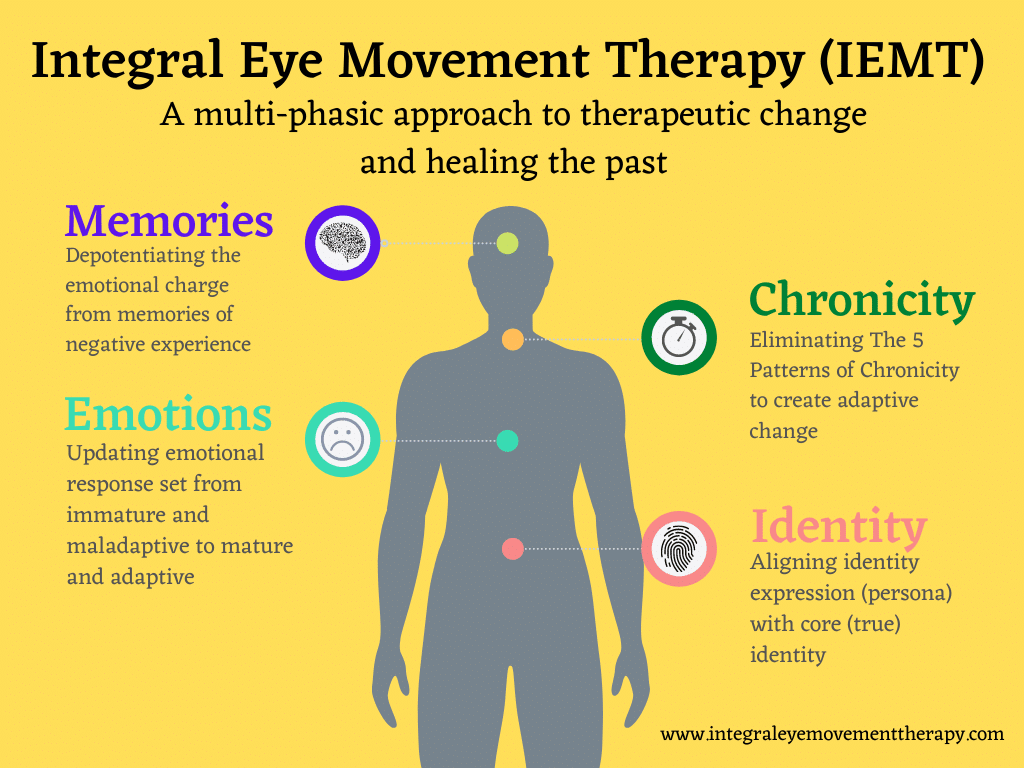
Difficult experiences can leave us with emotional reactions and beliefs about ourselves that continue long after the original event. Anxiety, fear, shame or self-doubt may appear in situations where we don’t understand why we’re reacting so strongly.
You might find yourself asking:
“Why am I like this?”
“Why do I still react as if it’s happening now?”
“Why can’t I just move on?”
IEMT (Integral Eye Movement Technique) works with two important concepts: imprints of emotion and imprints of identity.
An emotional imprint relates to how we feel. An identity imprint relates to what we’ve come to believe about ourselves.
There’s a difference between “I feel inadequate” and “I am inadequate.” One describes an emotional experience; the other describes a belief about who we are.
We start by exploring what’s troubling you now and what you’d like to change. Through a series of carefully structured questions, we work backwards from your current emotional responses to identify earlier memories and experiences that may be connected to them.
I then use specific, guided eye movement patterns as part of the IEMT process, working with the emotional responses and beliefs associated with those experiences. We check how your responses change as we go, with the aim of reducing their emotional impact on your life today.
You don’t need to know why you feel the way you do, or tell me the details of what happened.
Depending on your individual circumstances, the work may help you:
Feel less overwhelmed by anxiety, fear or difficult emotions
Experience less emotional distress when recalling painful memories
Work with negative beliefs such as “I’m not good enough” or “I always fail”
Feel less caught in recurring emotional reactions and patterns
Develop greater confidence and a more positive sense of self
Experiences and outcomes vary from person to person.
One of the most distinctive features of IEMT is that you don’t have to tell your story.
IEMT is a non-disclosure approach. I don’t need you to explain what happened, reveal personal details or repeatedly talk through painful experiences. We can work with the emotional response without you having to share the story behind it.
This can be particularly valuable for people who find discussing difficult experiences distressing, or who simply prefer to keep those experiences private.
It can also appeal to professionals working in sensitive or confidential roles, such as emergency services personnel, military personnel and healthcare workers.
Unlike ongoing programmes of weekly appointments, IEMT is typically offered as short-term work.
In my practice, many clients attend between one and three sessions, although this varies according to individual circumstances. Some people return later to work on different issues.
You remain fully aware and in control throughout the session, and we’ll work at a pace that feels appropriate for you.

Specialist Support for Riders
Alongside my general practice, I also help horse riders overcome nerves, anxiety, and confidence issues in the saddle. If fear or self-doubt is holding you back from enjoying riding, you can find more details on my dedicated IEMT for Equestrians page.